OSCE Cross-Dimensional Internship Programme 2026–2027: International Career Opportunity for Students and Recent Graduates

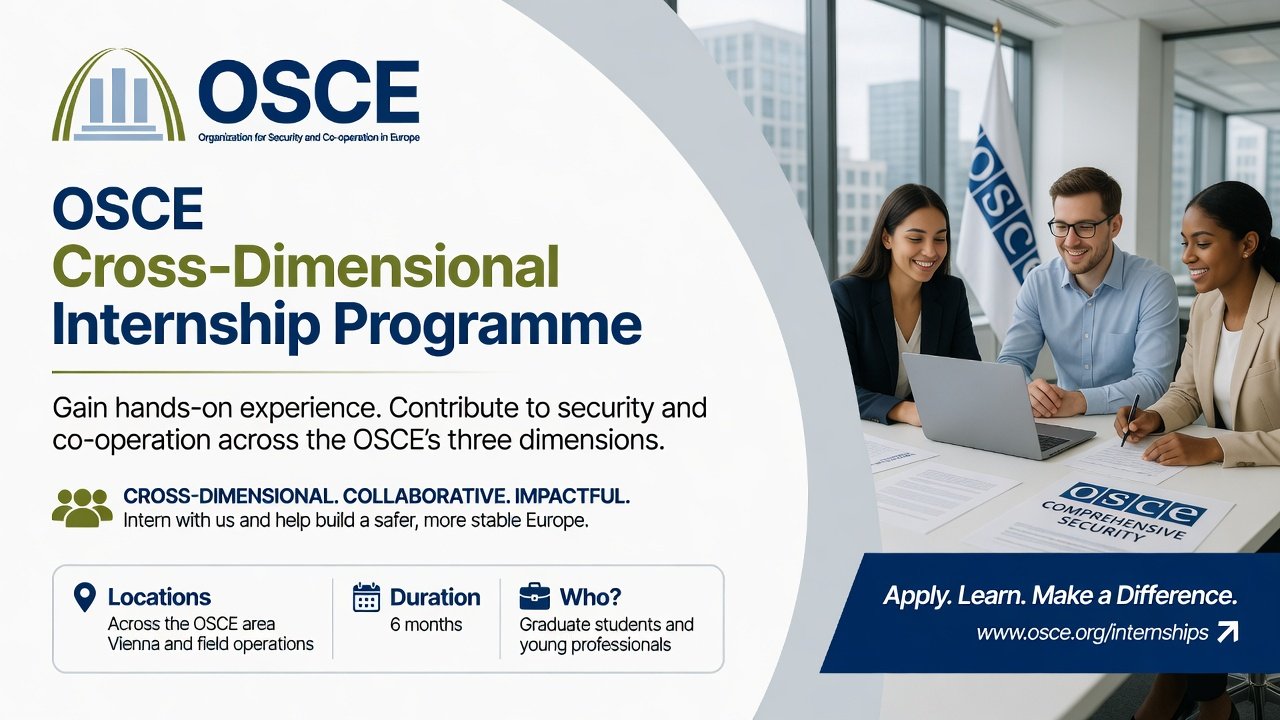
Launching an international career often begins with gaining practical experience in organizations that address global challenges. For students and recent graduates interested in diplomacy, security, human rights, governance, and international cooperation, the Organization for Security and Co-operation in Europe (OSCE) offers internship opportunities that provide valuable exposure to multinational policymaking and project implementation.
Among the most attractive opportunities in 2026–2027 is the OSCE Cross-Dimensional Internship Programme, which allows interns to contribute to initiatives that span multiple areas of the organization’s work. Rather than focusing on a single field, cross-dimensional assignments encourage collaboration across security, economic development, environmental sustainability, democratic governance, and human rights, helping interns understand how these issues are interconnected.
This guide explores everything you need to know about the OSCE Cross-Dimensional Internship Programme, including eligibility requirements, responsibilities, application procedures, benefits, and tips for preparing a competitive application.
Internship Overview
| Category | Details |
|---|---|
| Organization | Organization for Security and Co-operation in Europe (OSCE) |
| Programme | Cross-Dimensional Internship Programme |
| Internship Type | Full-Time Internship |
| Duration | Varies by Internship Assignment |
| Work Arrangement | On-site, Hybrid or Remote (Depending on the Vacancy) |
| Location | OSCE Institutions, Field Operations and Offices |
| Academic Level | Students and Recent Graduates |
| Fields | International Relations, Human Rights, Security, Governance, Public Policy, Communications, Research and Related Disciplines |
| Application Method | Official OSCE Careers Portal |
About the OSCE
The Organization for Security and Co-operation in Europe is one of the world’s largest regional security organizations, bringing together participating States to promote peace, stability, democratic institutions, conflict prevention, and international cooperation.
Its work extends across three broad dimensions:
- Politico-military security
- Economic and environmental cooperation
- Human rights and democratic governance
Cross-dimensional initiatives combine expertise from these areas to develop more comprehensive responses to today’s complex international challenges.
Interns contribute to this work by supporting research, programme implementation, communication, and policy development under the guidance of experienced professionals.
Why Cross-Dimensional Internships Are Important
Addressing Complex Global Challenges
Modern security issues often involve multiple factors, including governance, economic resilience, environmental sustainability, technology, and human rights. Cross-dimensional internships expose participants to this integrated approach.
International Collaboration
Interns work alongside professionals from different countries, cultures, and academic backgrounds while contributing to multinational initiatives.
Practical Policy Experience
Assignments often involve real projects supporting dialogue, research, programme delivery, and institutional cooperation rather than purely academic work.
Professional Skill Development
Participants strengthen analytical thinking, research, communication, project coordination, and intercultural collaboration skills that are valuable across international careers.
Areas Where Interns May Contribute
Depending on organizational needs, interns may support work related to:
Democratic Governance
Projects promoting transparency, accountable institutions, public participation, and democratic processes.
Human Rights
Research and programme support related to fundamental freedoms, equality, inclusion, and rule of law initiatives.
Security and Conflict Prevention
Activities supporting regional stability, confidence-building, crisis prevention, and security cooperation.
Economic and Environmental Activities
Projects addressing sustainable economic development, environmental governance, energy security, and climate-related challenges.
Strategic Communications
Supporting public information, digital communications, publications, media monitoring, and stakeholder engagement.
Research and Policy Analysis
Preparing research materials, policy summaries, briefing papers, and analytical reports for programme teams.
Key Responsibilities
Responsibilities vary according to the internship assignment but commonly include:
- Conducting background research on international policy issues.
- Collecting and organizing information from multiple sources.
- Assisting with policy analysis and programme documentation.
- Preparing briefing notes and research summaries.
- Supporting workshops, conferences, and meetings.
- Drafting correspondence and communication materials.
- Assisting with data collection and knowledge management.
- Monitoring developments relevant to assigned projects.
- Supporting administrative and project coordination activities.
- Collaborating with multidisciplinary international teams.
Qualifications & Eligibility
Educational Background
Applicants are generally expected to:
- Be enrolled in a university degree programme, or
- Have recently completed a bachelor’s or master’s degree.
Specific educational requirements depend on the advertised internship.
Relevant Fields of Study
Suitable disciplines may include:
- International Relations
- Political Science
- Law
- Public Administration
- Human Rights
- Economics
- Environmental Studies
- Peace and Conflict Studies
- Sociology
- Communications
- Journalism
- European Studies
Professional Skills
Competitive applicants often demonstrate:
- Strong research abilities.
- Analytical thinking.
- Academic writing skills.
- Attention to detail.
- Organizational skills.
- Team collaboration.
- Time management.
Technical Skills
Useful skills may include:
- Microsoft Office.
- Data analysis.
- Presentation preparation.
- Research databases.
- Digital communication tools.
- Project management software.
Language Requirements
Excellent English is commonly required for many internships. Knowledge of other OSCE working languages or regional languages may be considered an advantage depending on the assignment.
Internship Duration and Working Arrangements
The length of OSCE internships varies depending on operational needs and the specific vacancy. Some opportunities are office-based, while others may include hybrid or remote work arrangements where appropriate.
Applicants should carefully review each vacancy announcement for details regarding duration, location, and working arrangements.
Compensation Information
Internship conditions differ across OSCE institutions and field operations. Some internships may include financial support or allowances, while others may be unpaid. Compensation, if available, is determined by the individual vacancy announcement and applicable organizational policies.
Applicants should rely only on the information published in the official vacancy description and avoid assuming that every internship includes financial support.
Benefits of the Internship
Participating in the OSCE Cross-Dimensional Internship Programme offers numerous professional advantages, including:
- International organizational experience.
- Exposure to diplomacy and multilateral cooperation.
- Practical policy and research experience.
- Mentorship from experienced professionals.
- Opportunities to work in multicultural teams.
- Expanded international professional network.
- Enhanced communication and analytical skills.
- Strong preparation for careers in international organizations, government, NGOs, and research institutions.
Step-by-Step Application Guide
Step 1: Identify a Suitable Internship
Review current internship opportunities on the official OSCE Careers website and select a position that matches your academic background and interests.
Step 2: Prepare Your Resume
Your CV should include:
- Educational qualifications.
- Research projects.
- Internship experience.
- Volunteer activities.
- Technical skills.
- Language proficiency.
- Academic achievements.
Step 3: Write a Tailored Motivation Letter
Explain:
- Why you want to intern with the OSCE.
- Your interest in cross-dimensional work.
- Relevant academic or volunteer experience.
- How your skills align with the internship.
Step 4: Gather Supporting Documents
Prepare:
- Updated CV.
- Motivation letter.
- Academic transcripts (if requested).
- Degree certificates.
- References.
- Writing samples (where applicable).
Step 5: Submit Your Application
Complete your application through the official OSCE recruitment platform before the stated deadline. Ensure that all required documents are uploaded correctly.
Tips for a Successful Application
Improve your chances by:
- Customizing your CV for each internship.
- Demonstrating knowledge of the OSCE’s mission.
- Highlighting research and analytical achievements.
- Showing evidence of international or volunteer experience.
- Carefully proofreading every application document.
- Applying well before the closing date.
Common Mistakes Applicants Make
Sending Generic Applications
Recruiters look for applicants whose skills clearly match the advertised internship.
Overlooking Eligibility Requirements
Always verify academic qualifications, language requirements, and other eligibility criteria before applying.
Weak Motivation Letter
A strong motivation letter should explain both your interest in the organization and how your background supports the internship.
Missing Supporting Documents
Incomplete applications may not be considered during the selection process.
Waiting Until the Last Minute
Submitting your application early helps avoid technical problems close to the deadline.
Related Career Opportunities
If you’re interested in the OSCE Cross-Dimensional Internship Programme, you may also explore:
- United Nations Research Internship Programmes
- Council of Europe Traineeship Opportunities
- European Union Blue Book Traineeship Programme
These programmes also provide valuable experience in international affairs, public policy, research, and multilateral cooperation.
Frequently Asked Questions
Who can apply for the OSCE Cross-Dimensional Internship Programme?
Eligibility varies by vacancy, but internships are generally intended for university students and recent graduates who meet the educational and language requirements outlined in the job announcement.
Are international applicants eligible?
Yes. Many OSCE internship opportunities welcome applications from candidates who meet the nationality and eligibility criteria specified for the position.
Is previous work experience required?
Most internship opportunities focus on academic achievement, research skills, motivation, and relevant extracurricular experience rather than extensive professional employment.
Are all internships paid?
No. Financial support depends on the specific internship, host institution, and applicable organizational policies. Applicants should review each vacancy carefully for compensation details.
Can an internship lead to future employment?
An internship does not guarantee employment with the OSCE. However, it provides valuable international experience, professional networking opportunities, and practical skills that can strengthen future applications.
Final Thoughts
The OSCE Cross-Dimensional Internship Programme 2026–2027 offers students and recent graduates an excellent opportunity to gain practical experience within one of Europe’s leading international organizations. By contributing to projects that connect security, governance, human rights, economic cooperation, and environmental sustainability, interns develop a broad understanding of today’s global policy challenges while building valuable professional skills.
Although competition for these internships can be strong, applicants who prepare a tailored CV, a thoughtful motivation letter, and demonstrate a genuine interest in international cooperation will be well positioned to stand out. For aspiring professionals seeking meaningful international experience, the OSCE Cross-Dimensional Internship Programme can be an important step toward a successful career in diplomacy, international development, or public policy.